Markup vs margin for contractors: the difference that eats your profit
Markup is a percentage of cost; margin is a percentage of price. Formulas, a conversion table, and a worked example so your estimates hit the profit you planned.
"I add 20%" sounds like a pricing strategy, but it hides a question: 20% of what? If you mean 20% of your cost, that is markup, and your actual margin is only 16.7%. On a year of jobs, that gap is real money. Here is how to tell the two apart and price on purpose.
The two formulas
- Markup = profit ÷ cost. It answers: "how much did I add on top of what the job cost me?"
- Margin = profit ÷ price. It answers: "how much of what the customer paid did I keep?"
Same job, same dollars of profit, two different percentages. Markup is always the larger number.
Worked example
A job costs you $10,000 in labor, materials, and subs.
- With 25% markup: $10,000 × 1.25 = $12,500. Profit is $2,500.
- Margin on that same job: $2,500 ÷ $12,500 = 20%.
So "25% markup" and "20% margin" describe the exact same price.
Markup to margin conversion table
| Markup | Margin |
|---|---|
| 10% | 9.1% |
| 15% | 13.0% |
| 20% | 16.7% |
| 25% | 20.0% |
| 33.3% | 25.0% |
| 50% | 33.3% |
| 100% | 50.0% |
To convert yourself: margin = markup ÷ (1 + markup) and markup = margin ÷ (1 − margin).
How to price for a target margin
If you know the margin you need (say 20%) and your cost ($10,000), don't multiply cost by 1.20. Divide instead:
Price = cost ÷ (1 − target margin) → $10,000 ÷ 0.80 = $12,500.
Multiplying by 1.20 would give $12,000 — a 16.7% margin, and $500 less than you planned.
Where overhead fits
Markup has to cover more than profit. Insurance, vehicle, phone, software, tools, and the hours you spend estimating and invoicing are all overhead. A simple approach:
- Add up a year of overhead.
- Divide by a year of job costs to get your overhead percentage.
- Add your target profit on top. That total is the margin each job needs to carry.
If overhead is 12% of job costs and you want 10% profit, a 10% markup is not enough.
Common mistakes
- Treating markup and margin as the same number
- Applying markup to materials but not labor (or the reverse) without meaning to
- Forgetting that discounts come straight out of margin
- Using a markup percentage set years ago, before overhead grew
Doing this in Invo
In Invo you build the estimate from line items and apply markup to the job, so you can see cost, markup, tax, and total before you send:
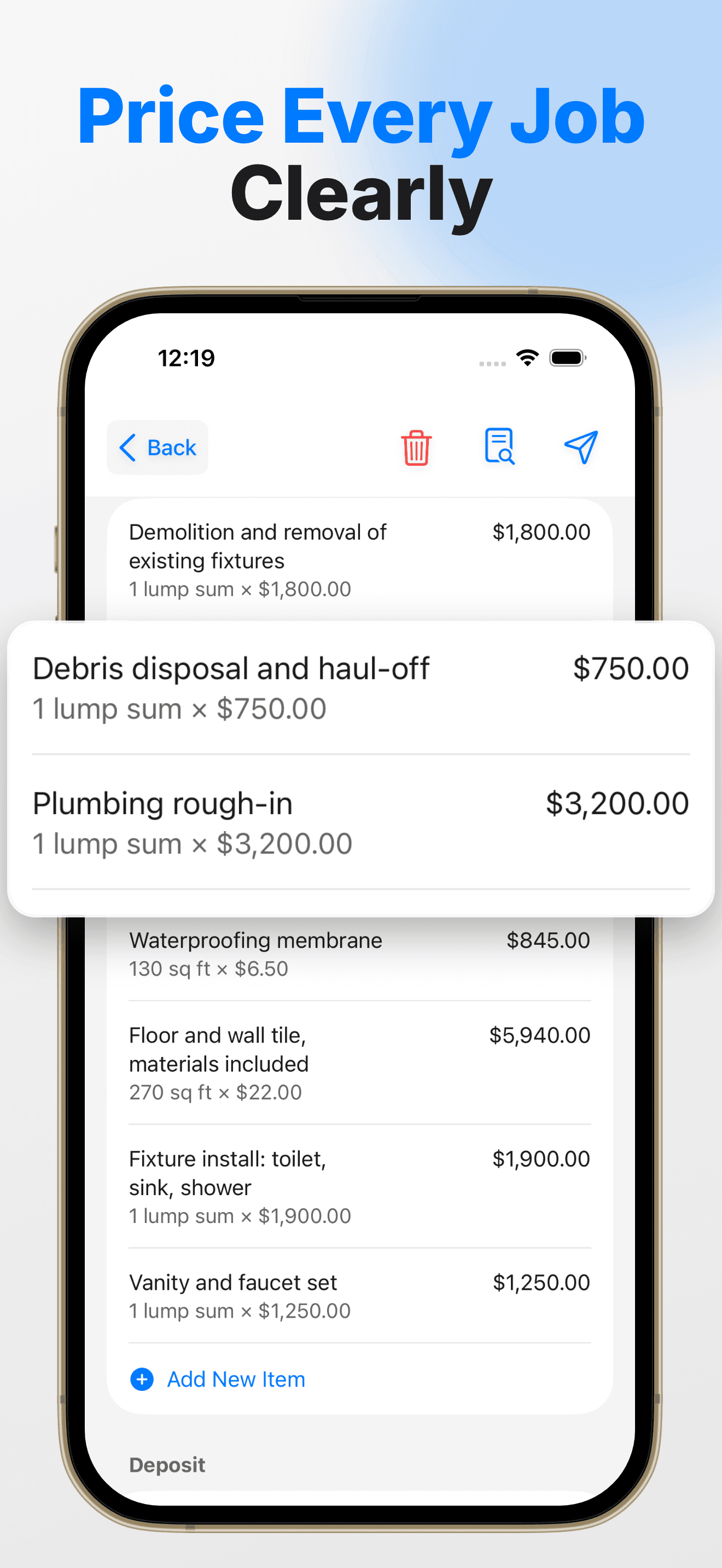
- Line items with quantity, unit, and unit cost
- Markup, sales tax, deposits, and payment history
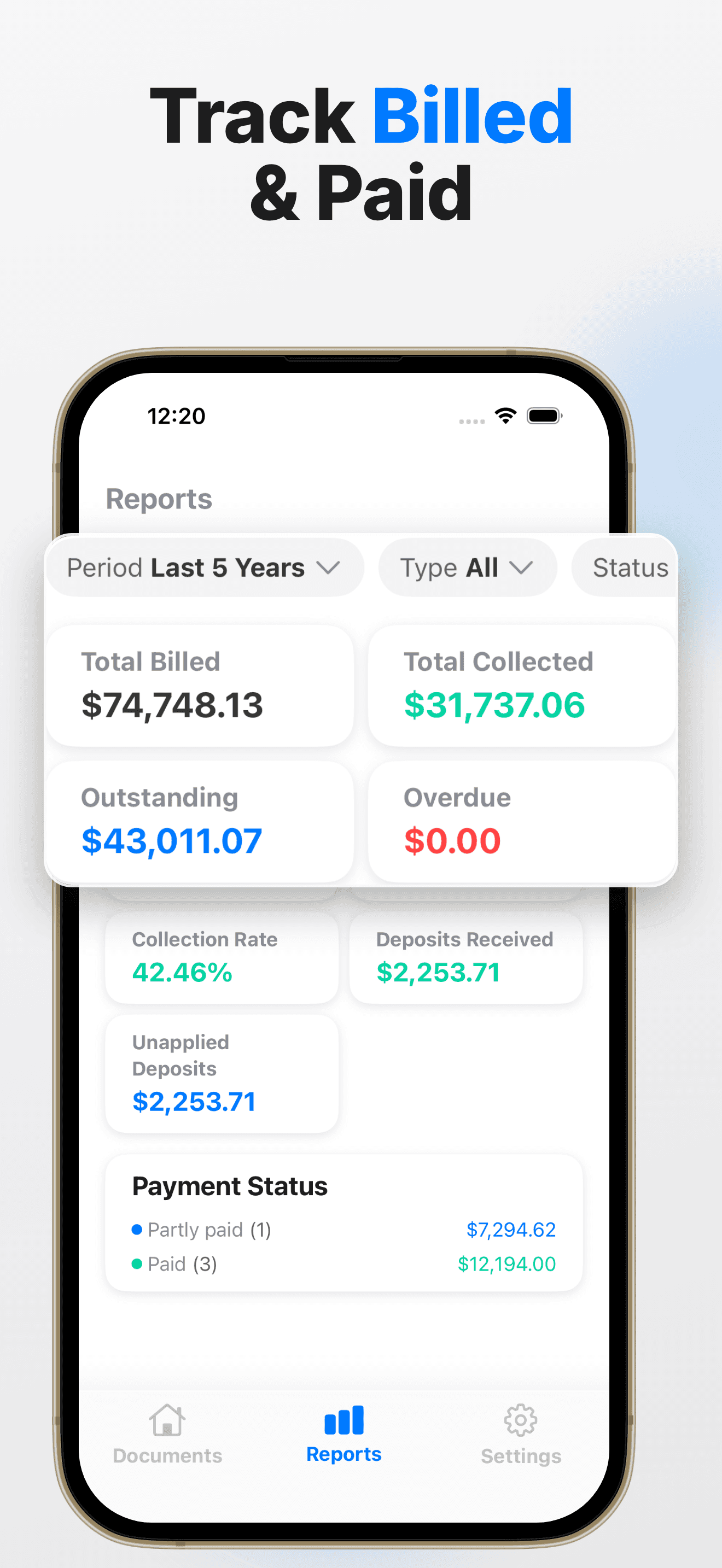
- Reports: billed, collected, outstanding, overdue
Next, see how to write a construction estimate that customers can actually evaluate.