How much deposit should a contractor ask for?
Typical deposit percentages by job type, legal caps to check before you ask, sample payment schedules, and how to record the deposit so the final invoice is right.
A deposit does three things: it pays for materials before you buy them, it reserves your calendar, and it confirms the customer is serious. Ask for too little and you finance the customer's job. Ask for too much and you lose the job, or break a local rule. Here is how to pick the number.
Typical deposit ranges
There is no single right number, but these ranges are common:
| Job type | Typical deposit |
|---|---|
| Small repair or service call | None, or bill on completion |
| Standard remodel | 10–30% |
| Custom or special-order materials | 30–50% |
| Large multi-week project | Deposit plus progress payments |
The more money you have to spend up front (custom cabinets, special-order tile, windows), the higher the deposit should be.
Check the legal caps first
Some places limit how much a contractor can collect before work starts, especially on home improvement contracts. For example, California caps the down payment on most home improvement contracts at 10% of the contract price or $1,000, whichever is less, and Maryland limits deposits on home improvement contracts to one-third of the price.
Rules change and vary by state, country, and job type. Check your local licensing board before you set a policy. This guide is not legal advice.
Use a payment schedule on bigger jobs
On longer jobs, a single deposit plus a final invoice leaves too much risk on your side. Tie payments to milestones the customer can see:
| Milestone | Payment |
|---|---|
| Contract signed | 10–30% deposit |
| Rough-in complete | 30% |
| Drywall or tile complete | 30% |
| Final walkthrough | Balance |
Write the schedule on the estimate so nobody is surprised by the second request.
How to ask for the deposit
- Put the deposit amount and due date on the estimate, not just in a text
- Explain what it covers: "The deposit covers special-order tile and reserves your start date."
- Say whether it is refundable, and under what conditions
- Ask for the signature and the deposit at the same time
Record it, then bill the balance
The most common deposit mistake is not asking too much or too little. It is forgetting to subtract the deposit on the final invoice, or subtracting it twice. Record every deposit and progress payment against the document with a date and amount, and let the invoice show the balance due. See how to turn an estimate into an invoice for a worked example.
Doing this in Invo
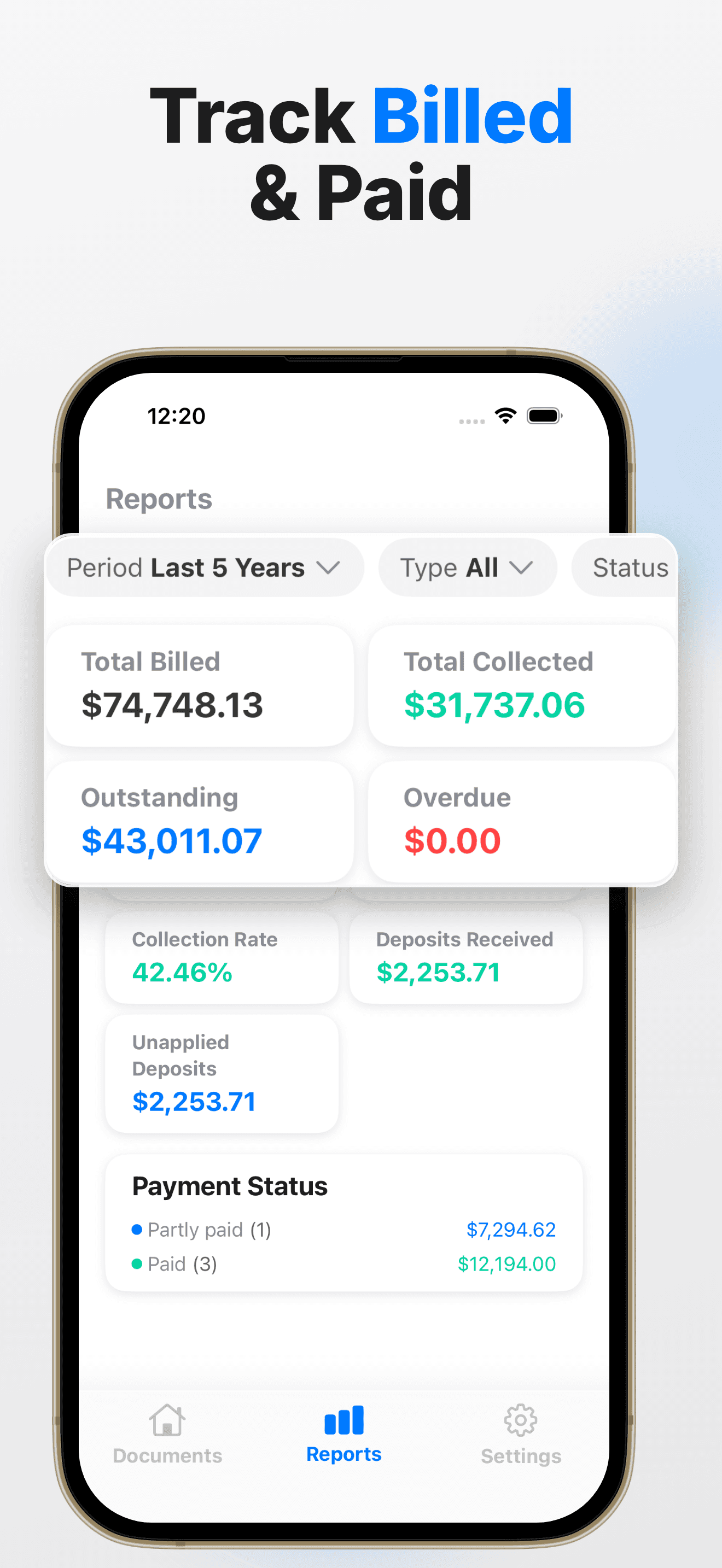
Invo keeps deposits and payments on the document itself, and the reports show what is still owed:
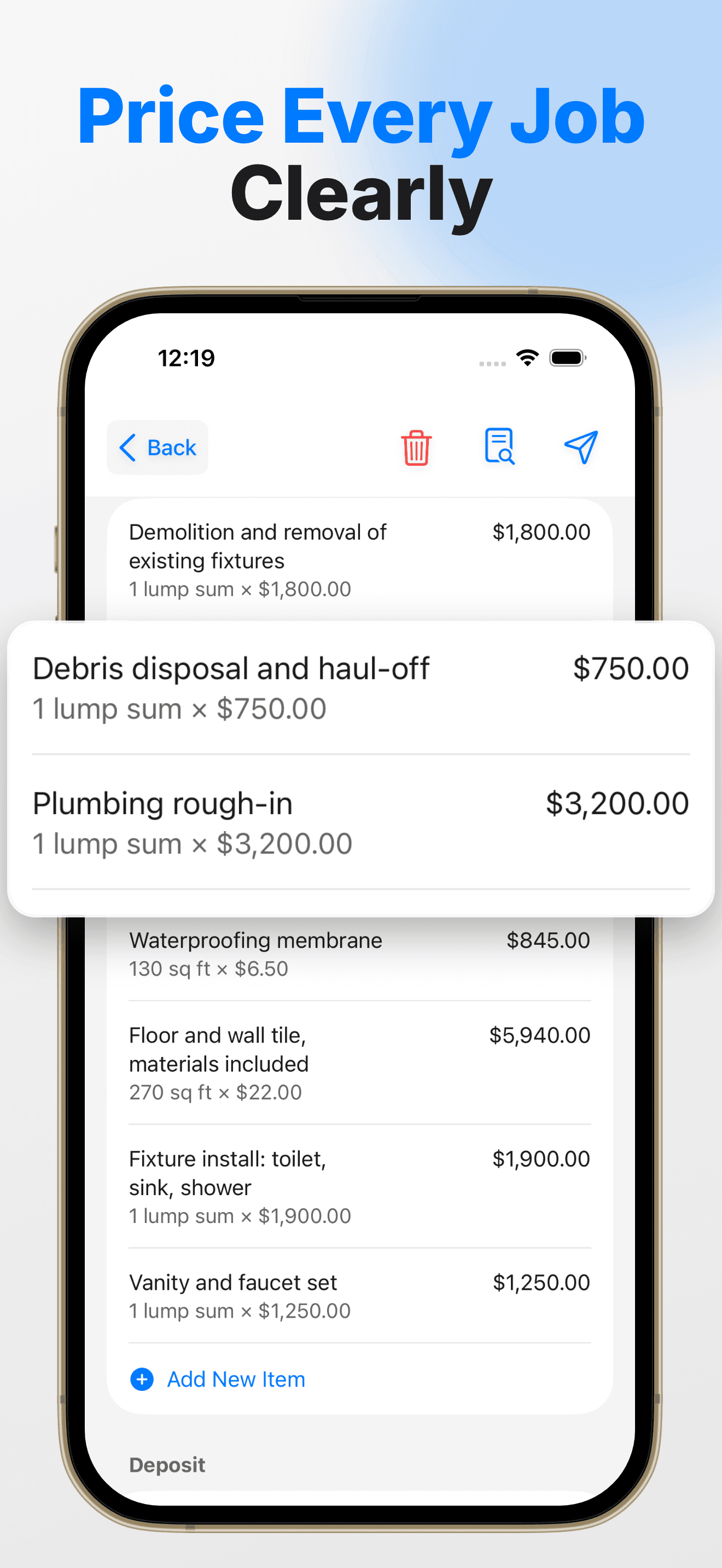
- Markup, sales tax, deposits, and payment history
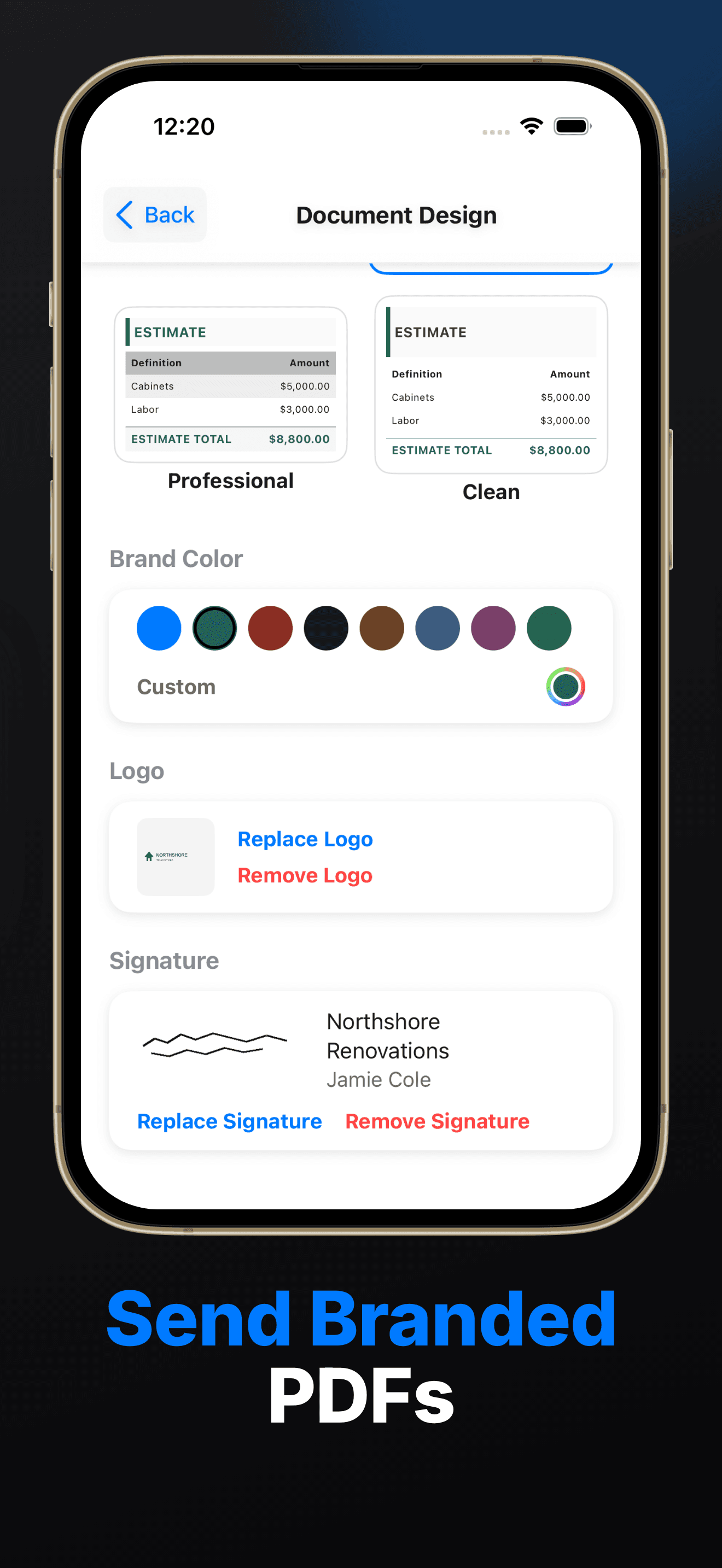
- Your signature on every branded PDF
- Reports: billed, collected, outstanding, overdue
- USD, EUR, GBP, and TRY